
The morning after I graduated from Colorado College, I walked around campus and noticed that the buildings had changed. It wasn’t that new construction had taken place—rather, it was as though some symbolic layer of meaning had been removed from the buildings, their earthen reality revealed. Apart from the purpose the buildings had served for me when I was a student, they looked both naked and alien, edifices of sand with little reason for existing; in a way, this alteration made the buildings appear monstrous.
I have observed this same sort of symbolic unraveling in other locations in which I have lived, and currently it is happening in my hometown of Santa Fe, New Mexico. Where before I drove to and parked at a particular vista from which I could appraise the entire city, reflecting on my life, now that same vista dulls before my eyes; it is a beautiful place, but there is no special feeling that occurs there, no sense that the vista was sculpted for me. Similarly, there are all manner of trails I walk, restaurants I frequent, even friendships and activities that for years now have constituted home… Some essence to these phenomena has quietly dissolved, baring them to my dissecting gaze.
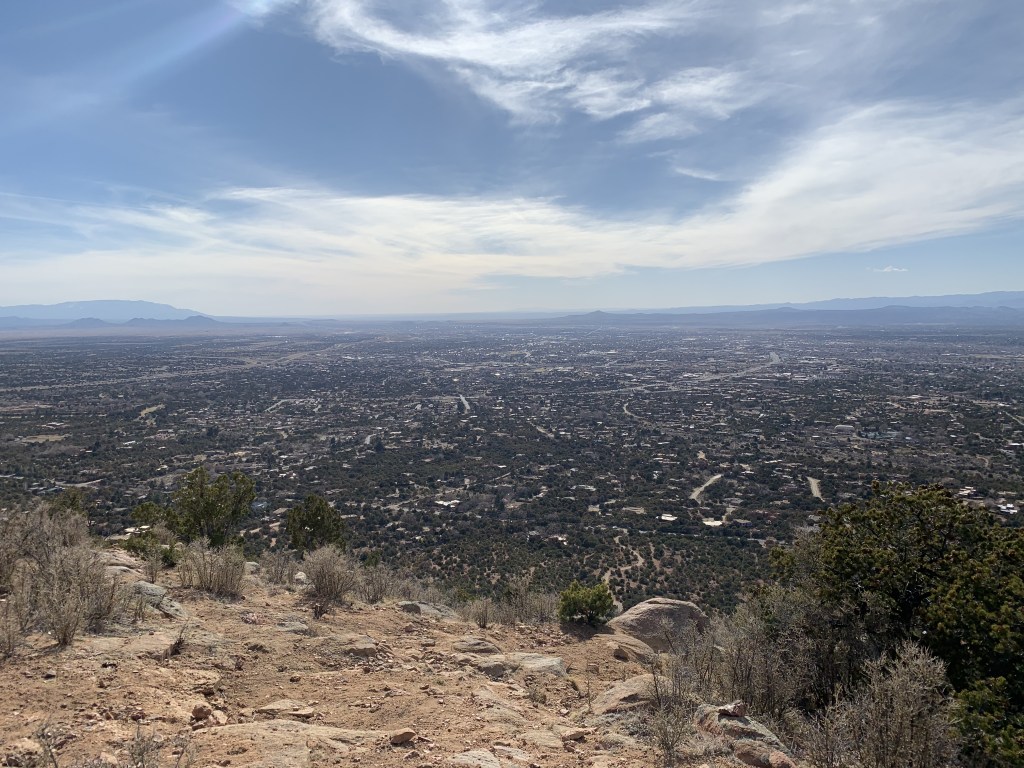
One takeaway from this kind of transformation could be that the sense of symbolic purpose to any location or activity is illusory, and that the symbolic purpose’s dissolution is something to be celebrated. After all, the nudity in which I now encounter Santa Fe is more likely its deepest reality, the state in which the city would exist were humanity wiped from the earth. It is not as though, in such an absence of humanity, the location would continue speaking in human language.
And yet for me, there is a perspective from which symbolic reality is just as true as “objective” reality, just as representative of the multifarious organism that is the whole. When humans are in touch with our purpose, life opens itself up to us, offering glittering paths forward to wholeness, joy, and liberation. The converse is true those times we are fighting against our purpose, when life thwarts us by means of apparent “accidents,” stagnation, illness, and other signs; life tells us where it wants us to go, in vocalizations that echo those of the average dream.
To me, it is not necessary to choose between symbolic and objective realities, but rather to see that each serves as an indication of the passage of time, of the way in which life consistently rends the seas for us and thereby acts as our compass. That is, in times when we newly arrive to some place or activity that augurs our growth, life bequeaths that thing symbolic meaning, threading into the narratives of our lives in ways that prove affirming. Similarly, when growth and thus purpose begin to wane, life lifts from our eyes this symbolic residue, illuminating the destitution underneath. This destitution in itself need not feel bleak; rather, it can double as a confirmation that life’s glory does not derive from human meaning, that even without the vista’s existing merely for us, that vista is an incredible construct of nature.
Through the desert of the real wends a path carved entirely for us, one which can be followed without negating that alternate paths would be perfectly worthwhile. Furthermore, even in lieu of a path the resolution of reality boggles the mind, enchanting us with its vastness; life’s redolence is such that even when it denies us symbolic meaning, we can delight in the simple fact of existence.
 Jackson Holzberg Buckley