Recently, my father and I took a two-week trip to Denmark and Sweden. Although the trip also involved a tour of the Elsinore castle, a cycling tour of the Swedish countryside, and a leisurely stay in Stockholm, I had an ulterior purpose: to investigate the stereotype that people of this region (but Sweden in particular) are the most beautiful in the world.
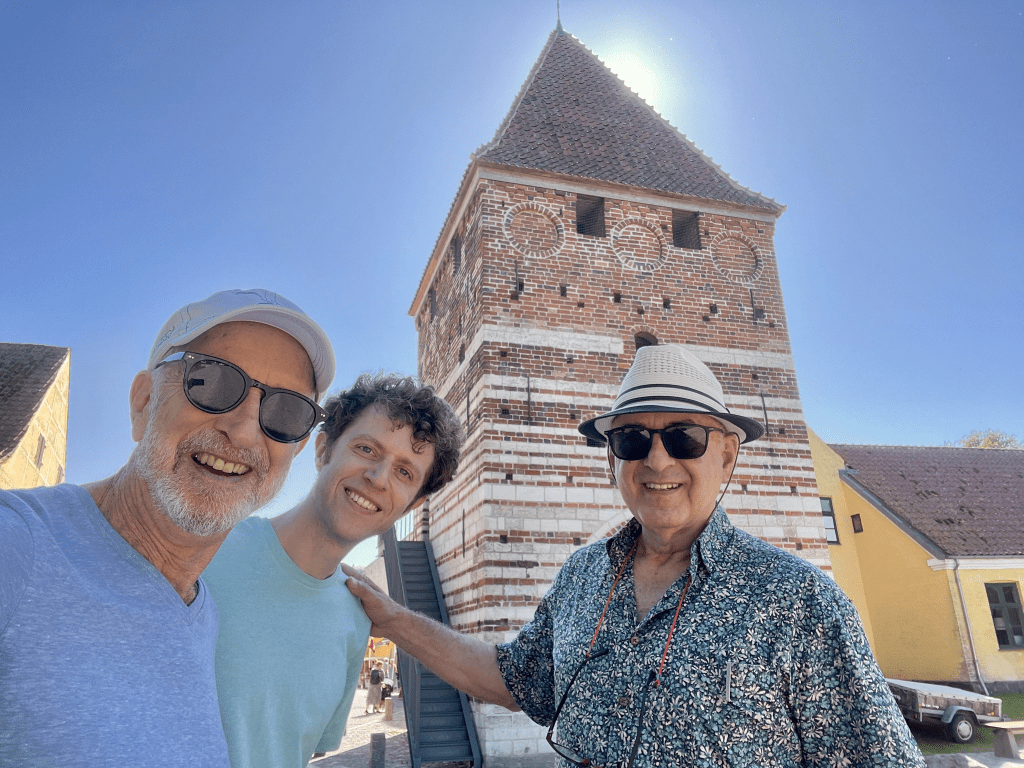
Well, it’s true! Applying the ten-point attractiveness scale to couples pushing strollers in Stockholm, we noted that man and woman alike would qualify as 12s or 14s, meaning the baby itself would likely grow into a 24 or -8. The same applied to people working jobs which would be considered “lowly” in the US—for example, the fruit vendor who surprised us with a classy haircut and perfect English, the hotel concierge my father and I agreed was one of the most arresting people we had ever seen. By the end of the trip, my father joked that his radar had “broken” and he no longer perceived the beauty; it was ubiquitous in this culture, and those afflicted doubled down by speaking as many as five languages and coming across as approachable and bubbly.
At first blush, the reason for this physical superiority is simple: Swedish people tend to be tall, thin, and blond, all archetypes which visual culture has agreed to equate with beauty. That is, they emanate the paragon to which all people aspire, almost as though they are factory-coded models.
As I reflected on the situation, though, more interesting causes emerged. One is that Swedes are simply, well, happy. As my father and I remarked throughout the trip, we saw scarcely any trash in public parks and on public streets, and we biked hundreds of miles without encountering a single pothole. In Stockholm, we glimpsed a single homeless person over multiple days, joking with each other to the effect, “Oh, there’s the town homeless person again!” In other words, homelessness is exceedingly rare. Adding on to these findings, Sweden’s socialist tax scheme means that healthcare and education are both free, and the country makes progressive strides toward environmentally friendly transportation. What is there to complain about?
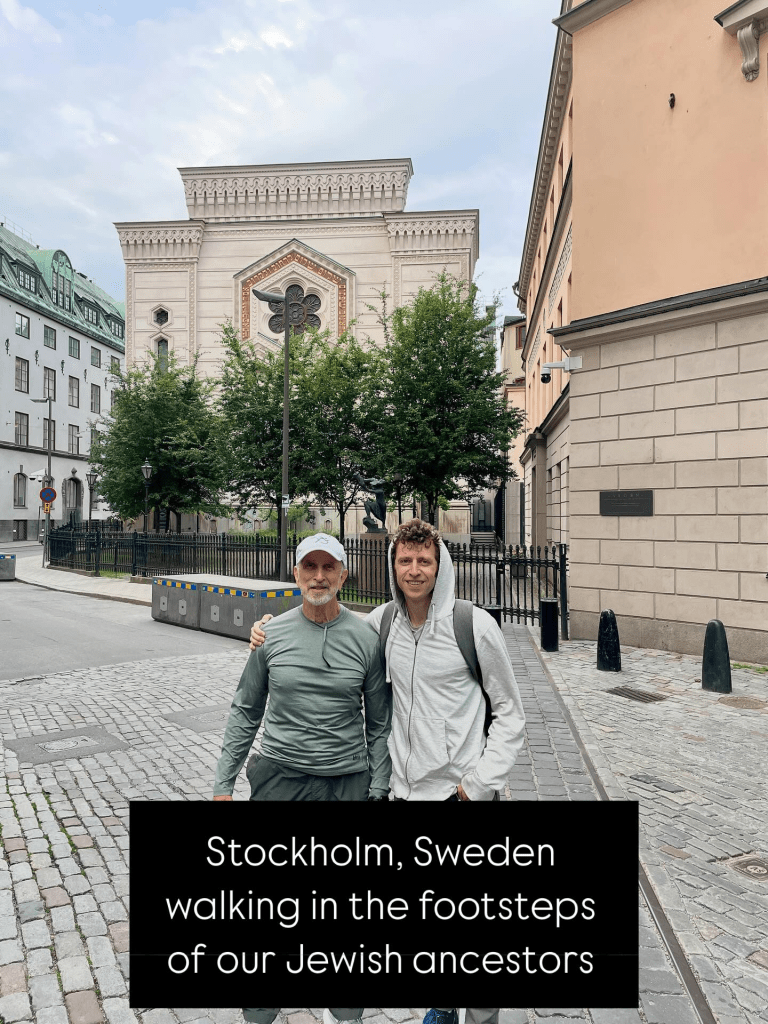
On a similar note, a word which came to my father and I as we biked throughout the Swedish countryside was “pride.” In this country, even rural farms beam with freshly applied paint and well-maintained siding, and equipment is housed in its proper place and free from rust. When it comes to their history, some question the Swedes’ role in WWII, as the country maintained “neutrality” despite increasing pressure from the Nazis; at the same time, the Swedes retaliated against this pressure by rescuing thousands of displaced Jews. When my father and I spoke with both tour guides and locals, we could feel a joyfulness to share their culture, a sense of confidence and equanimity. Especially as compared with our own, American conscience, why should theirs be haunted?
Taking all this together, my theory is that Swedish people brim with feelings of safety, support, and pride. As their government’s structure is parliamentary, and thus more collaborative, there is also a chance they feel greater autonomy, a sense that their voices are synthesized rather than railroaded into gridlock. For these reasons, their natural qualities flourish: women wear light makeup that accentuates their given features and elegant clothing that does the same; men are fit, clean-shaven, and dress to impress even on a Saturday morning. By virtue of their aesthetic choices, Swedish people evince a core radiating with confidence, vulnerability, and joy.
Contrast all of this with the US, where people can often manifest a sort of downtrodden, sardonic energy. Whether queer or straight, US women are regularly beset with tattoos, piercings, and muscular physiques, adaptations to a patriarchal culture that serve either to ward off men or to rebel against masculine expectations; similarly, US men don stubble, messy hair, and t shirts, a lack of care with respect to appearance that signals a deeper self-loathing. Inescapably, these sartorial choices testify to the oppression of the dominant culture, the way in which no American feels happy or free.
As our trip drew to a close, both my father and I became somber, filled with foreboding at returning from such an idyllic land to one rife with shame and currently in freefall. As I questioned myself in my journal, who in America can genuinely avow they are proud of their country? On the left, people bristle at the crimes of American history and welcome the fall of a bloated, extractive empire; on the right, people can claim pride, but it is a pride reliant on censorship, aggression, and hostility toward opinion and fact alike.
At times I have thought of returning to Sweden with hat in hand, begging forgiveness for the fact that I myself am no 10 (nor 12 nor 14). At other times I have felt a duty to protect lands like the Nordic ones from my own folly, from the dying American empire which threatens to drown all with the tides of its throes. In a world assailed by climate change, in a sense there is no escape from anything, certainly not through emigration; we are all of us bound together, and the Swedes could be relegated to America’s fate despite having made preferable choices. For these reasons, it may be the case that, as one of my fellow cyclists noted, Americans have not just an opportunity, but a duty to improve our country for the rest of the world; we were born here, and as such our lot has been chosen.
As I reacclimate to a nation in which trash lines the gutters, and in which homelessness is rampant, and where our history is cause for shame, and in which obesity is more common than a 10, perhaps it will be useful to reflect on my trip to Denmark and Sweden, a pair of lands that now feel akin to Black Panther’s Wakanda, a dream within a dream. That is, perhaps it will be useful to remember—and to brazenly hope—that things can be better.
 Jackson Holzberg Buckley
Thank you for writing this beautiful and thoughtful blog. In my ruminations after returning to Los Angeles I boil it back to the differences that the governments of our countries tend to overlay on the people who live with their borders.
Our capitalistic democracy tends to attract immigrants who want to come here to make money. The drive to achieve more and more tends to pit us against one another and often overstep a competing citizen who is in our way. I
n a social democracy like Sweden immigrants seem to be drawn to the country to live a better life. The reduction in anxiety from knowing that basic human needs will be met by your country seems to promote health, and the great pride that you speak of.
Thank you for writing this blog, taking the trip, and continuing to imagine a brighter tomorrow.
PS – If you do decide to move to Sweden, where teachers are paid well, respected, given great healthcare and retirement… I’ll visit every summer
LikeLike